Reverse Osmosis vs Ultrafiltration: How to Choose for Your Market
By Li-Men Editorial Team · October 17, 2026
Many customers ask, “Which is better, reverse osmosis or ultrafiltration?” The short answer is that they solve different problems. For a distributor or installer, understanding that difference prevents poorly matched sales and later complaints.
What each technology does
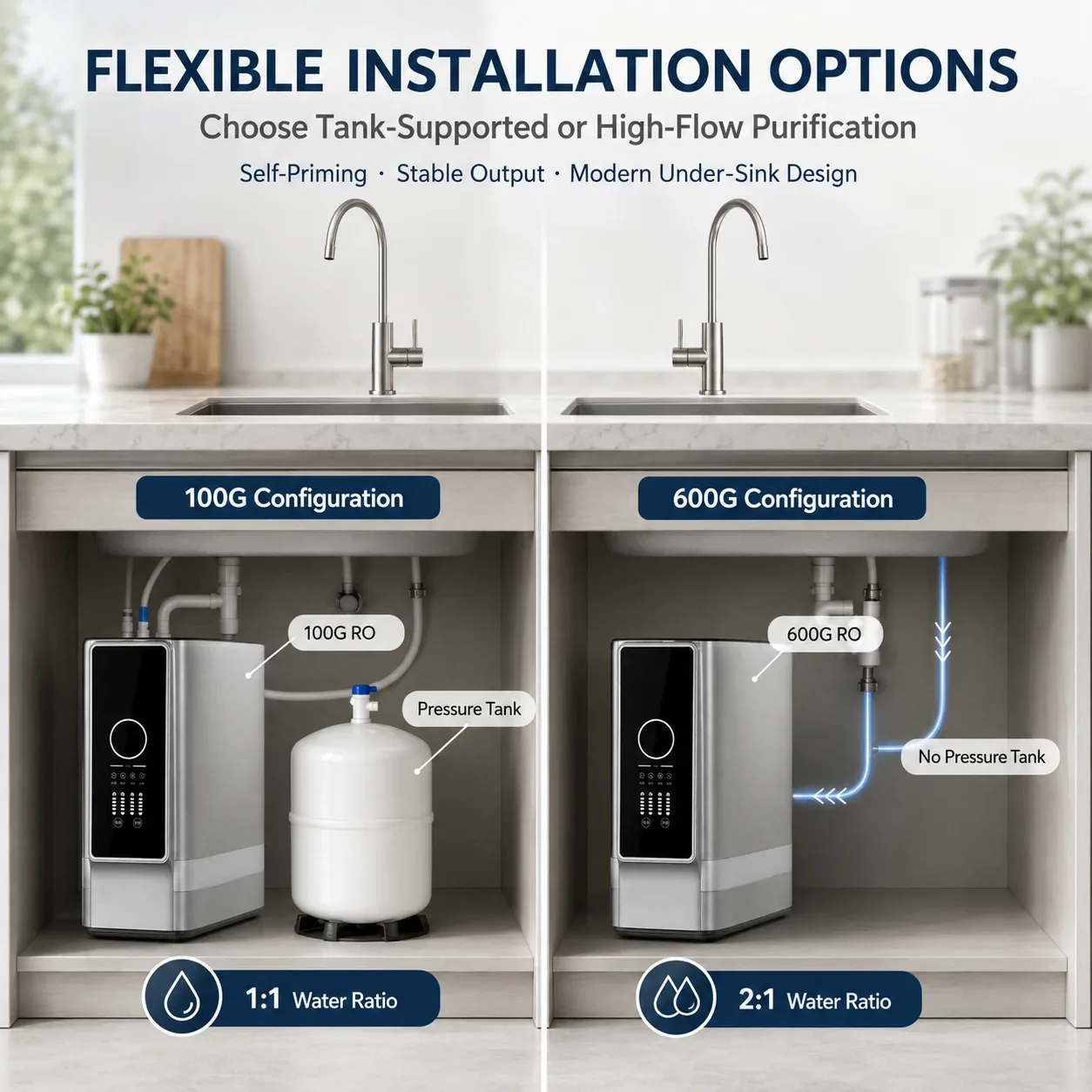
Reverse osmosis (RO). RO uses an extremely fine membrane — 0.0001 micron in units such as our D10 and D12. Besides particles and sediment, it reduces dissolved salts and other dissolved substances in the water, giving a very clean taste. In return, the process produces reject water and usually needs sufficient pressure or a booster pump.
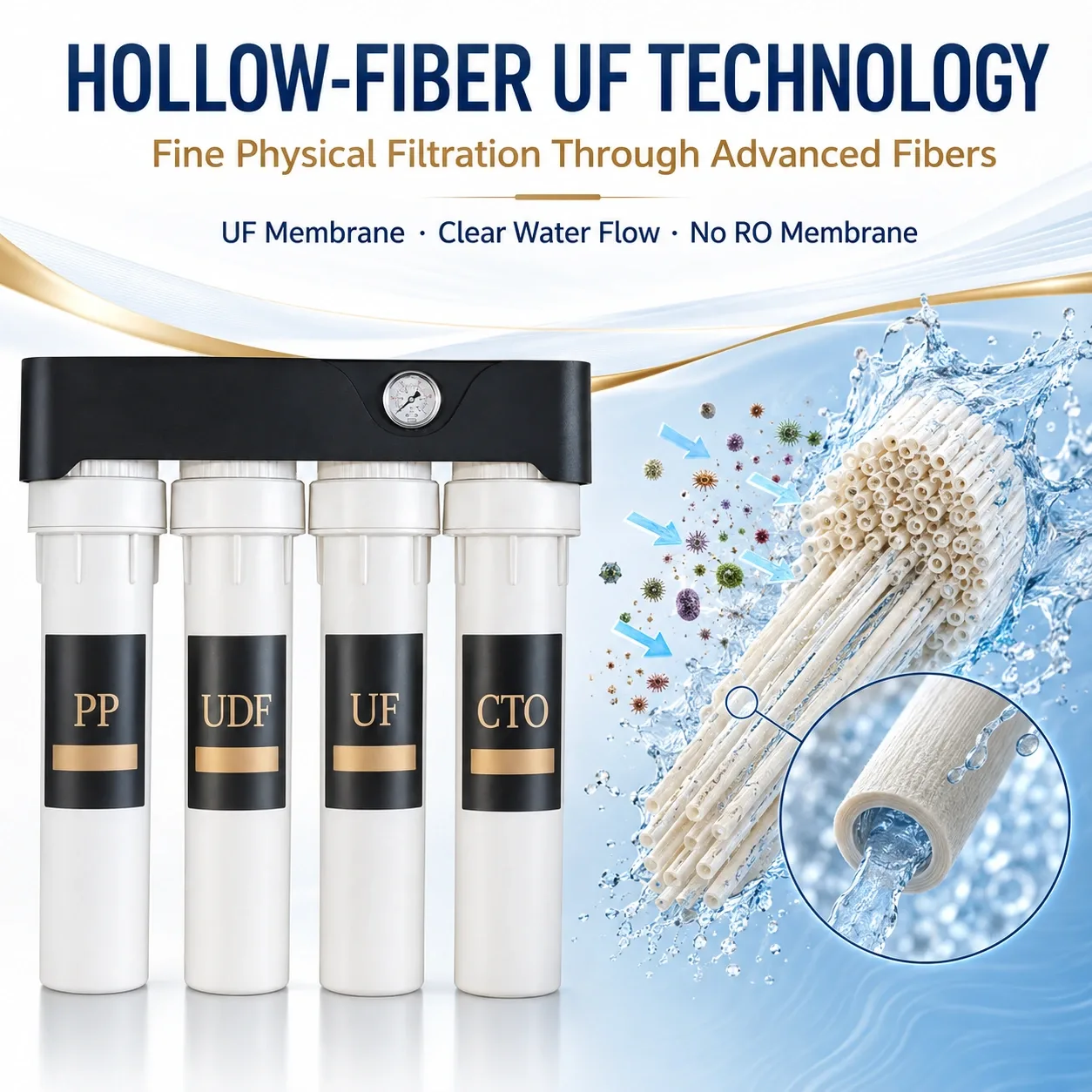
Ultrafiltration (UF). UF uses a membrane with larger pores than RO. It retains particles, turbidity and sediment, but it is not designed to reduce dissolved salts. Its advantages are high flow and simpler operation.
Practical comparison
| Aspect | Reverse osmosis (RO) | Ultrafiltration (UF) |
|---|---|---|
| Dissolved salts | Reduces them | Does not reduce them |
| Particles and sediment | Yes | Yes |
| Flow | Lower; depends on capacity (GPD) | High; e.g. 10–20 L/min in our 20-inch range |
| Reject water | Yes | Depends on the design |
| Typical use | Drinking and cooking water | Pre-filtration, whole-kitchen or general use |
How to choose by water and use
- Test the water, or ask for a test. This is the most important step. The TDS (total dissolved solids) reading and the presence of sediment guide the decision.
- Municipal water with low dissolved solids and some turbidity. A UF system may be enough if the customer mainly wants particle-free water with good flow.
- Water with high TDS or a salty / mineral taste. RO is the right technology here, because UF does not reduce dissolved salts.
- Customers who want the best-tasting drinking water. An under-sink RO system.
- High flow demand (commercial kitchens, several points of use). High-flow UF, or a combination: UF for general use and RO only for drinking.
Remember that our systems are specified for municipal tap water. For well water or other sources, a water test is essential before recommending any equipment.
Examples from our range
20-inch ultrafiltration:
- D06: 3 stages (PC + UF + carbon), 10–15 L/min, 450 × 135 × 715 mm.
- D07: 4 stages (PC + PC + UF + carbon), 15–20 L/min.
- D08: 5 stages, with a third PC stage ahead of the UF membrane.
Reverse osmosis:
- D10: under-sink RO in 400G, 600G and 800G with grooved PP, a 0.0001-micron membrane and post carbon.
- M29-RO100: 100 GPD, 5-stage RO with a 2.8-gallon tank.
- For higher-demand commercial sites: D13 (800G to 1600G) and D12 (1200G to 3600G).
What installers need to know
- Inlet pressure: RO needs sufficient pressure; if it is low, a booster pump is required.
- Power: confirm the voltage and plug type for the market. Units can be configured to project requirements, for example 110–120 V / 60 Hz or 220–240 V / 50 Hz.
- Drain: RO needs an outlet for reject water.
- Maintenance: tell the end customer how often filters are replaced — it is also a recurring sales opportunity for you.
Conclusion
The right question is not “RO or UF?” but “what problem does my customer's water have, and what will they use it for?” With a water test and these questions, the recommendation is almost always clear.
Have a specific project? Send us your water data (if available), the intended use and the estimated quantity, and we will suggest a suitable configuration.