How to Import Water Purifiers from China: A Checklist for Distributors
By Li-Men Editorial Team · October 22, 2026
Importing water purifiers from China can improve your margin a lot, but only if the product and the paperwork are clear before the first payment. This checklist covers what a distributor should settle with the manufacturer and the customs broker.
1. Define the product for your market
- Type and capacity: under-sink, countertop, dispenser or commercial system, plus capacity in GPD. See our capacity guide.
- Voltage, frequency and plug: state your country's requirements in the first inquiry. We configure them per project; for example, we have built units at 110–120 V / 60 Hz with US-type plugs.
- Feed water: municipal or well water, and the available pressure. This affects whether RO, ultrafiltration or a pre-filter is the right choice.
2. Order samples first
A sample lets you check noise, flow rate, faucet quality and packaging. Ask exactly which configuration the sample uses and whether it matches mass production.
3. Know the MOQ
Our minimums depend on the level of customization:
| Option | Minimum order |
|---|---|
| Standard models | 10 units |
| Your logo on the machine | 50 units |
| Custom front panel or housing | 100 units |
| Custom printed color box | 500 units |
| Full private label with standard packaging | from around 100 units |
4. Customization and labeling
Put the logo, colors, packaging and printed text in writing. If your market requires local-language labels, importer details or specific warnings, tell the manufacturer before approving final artwork.
5. Documents to request
- Commercial invoice and packing list with weights and dimensions per carton.
- Bill of lading or air waybill.
- Specification sheet for each model.
- Certificates or test reports that apply to the exact model. A certificate does not automatically cover a whole range; see how to verify water purifier certificates.
6. Incoterms and payment
Agree the Incoterm in the quotation:
- EXW: you collect at the factory and handle all transport.
- FOB: the supplier delivers the goods loaded at the port of origin; freight and insurance from there are yours.
- CIF: the supplier pays freight and insurance to the destination port; import clearance and final delivery remain your responsibility.
Payment terms are confirmed in each quotation.
7. Estimate shipping volume
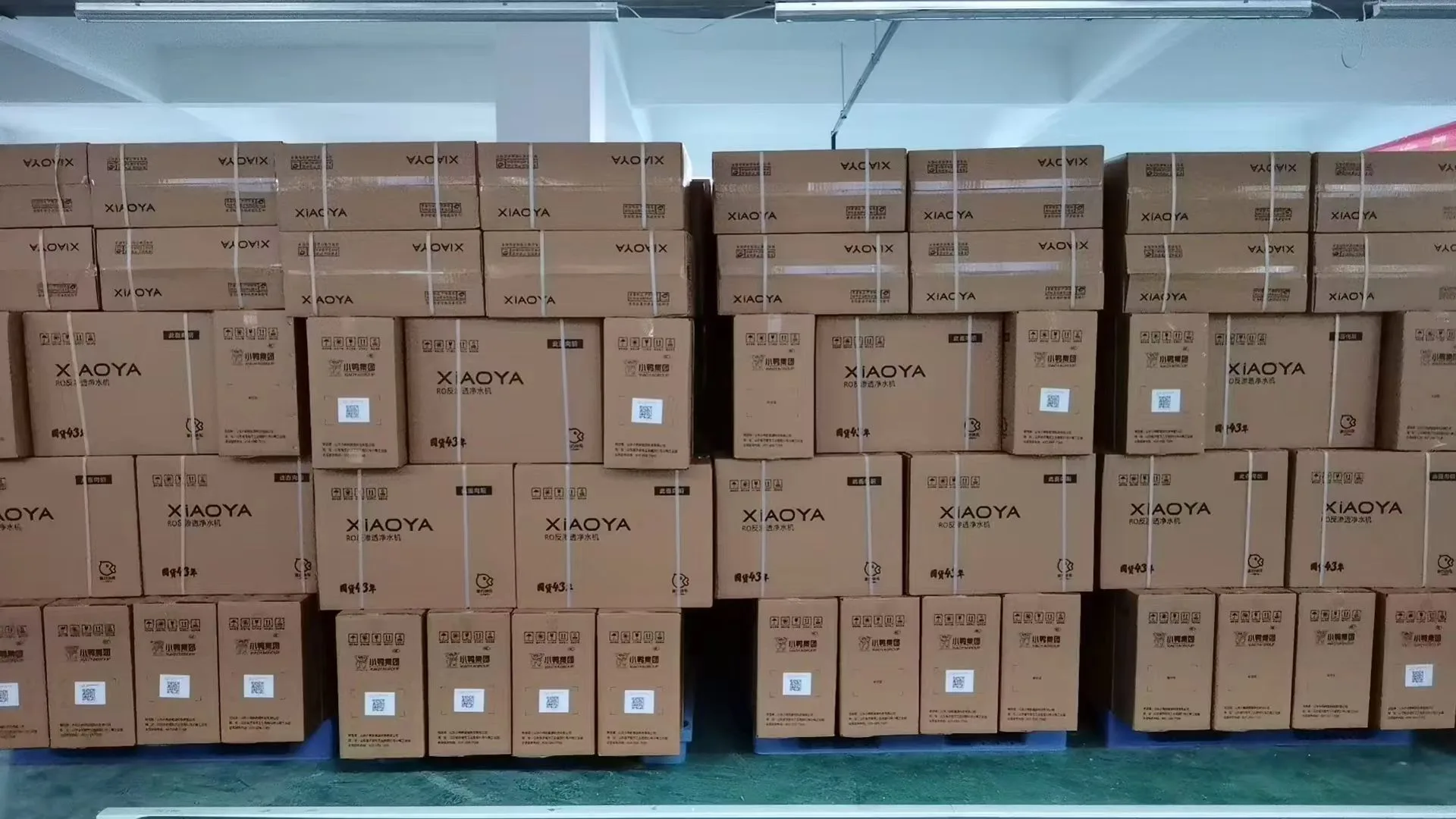
Packaging dimensions let you estimate container space. Example with our D10 (carton 485 × 320 × 670 mm): each carton takes about 0.104 m³, so 100 units come to roughly 10.4 m³ before palletizing. Treat this as an estimate and confirm against the final packing list.
8. Local rules and customs
Every country has its own labeling, electrical-safety and tariff-classification rules. Your customs broker will confirm the tariff code and requirements for each model, so ask before you place the order, not after.
Quick checklist
- ☐ Type, capacity, voltage and plug defined
- ☐ Sample approved
- ☐ MOQ and customization confirmed in writing
- ☐ Logo and packaging artwork approved
- ☐ Documents and certificates for the exact model
- ☐ Incoterm and payment terms agreed
- ☐ Volume estimated and space booked
- ☐ Local requirements confirmed with your customs broker
Planning your first import? Tell us your market and estimated quantity. For common questions, see our FAQ or browse under-sink RO water purifiers.